
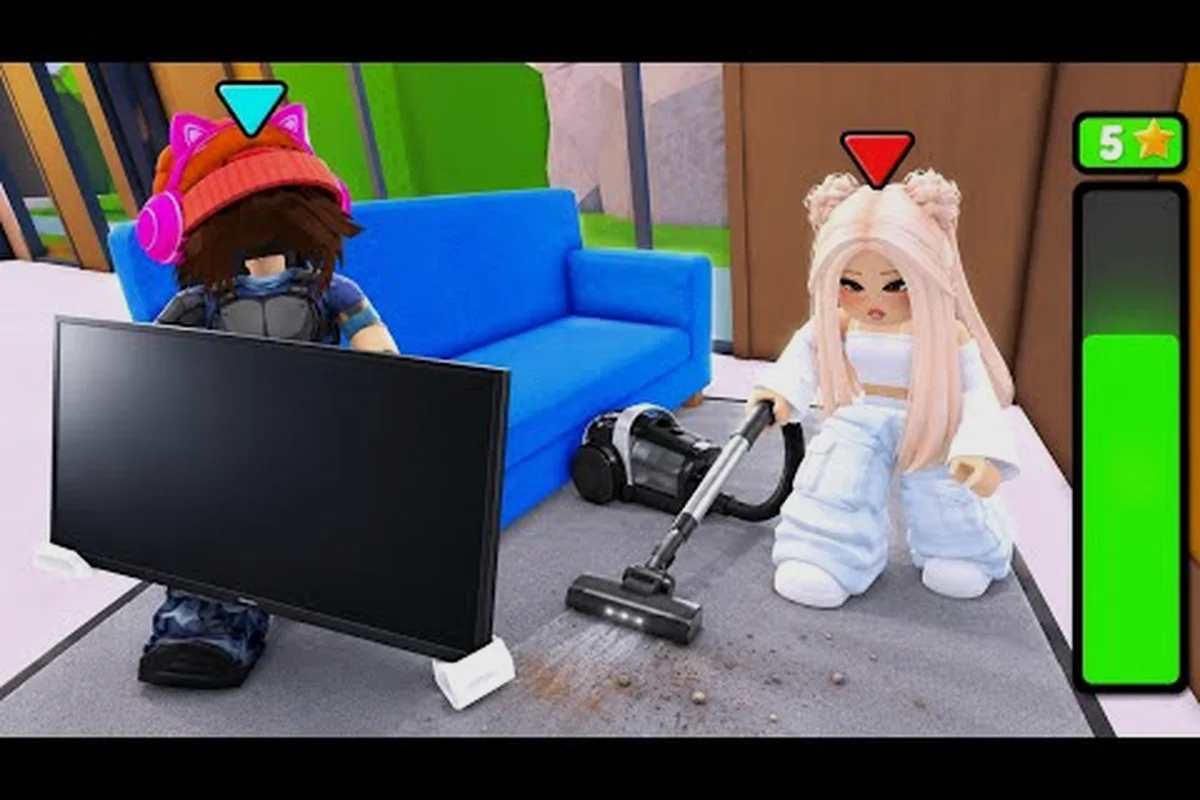
Flip a house squads turn a solitary renovation grind into a coordinated four-player operation where speed, cash flow, and chaos all scale together. The game officially supports up to four players working on the same property, which means every paint stroke and trash bag either compounds your profit or creates friction depending on your crew. Understanding how solo play compares to co-op teamwork determines whether you finish a flip in minutes or spend half the session fighting over who cleans the toilet.
What Flip a House Squads Actually Change
The core loop of Flip a House stays identical whether you play alone or with a group: buy a run-down property, clean the trash, repair surfaces, paint walls, furnish rooms, and sell for profit. What changes with flip a house squads is the execution layer — how tasks get distributed, how money gets split, and how much time each renovation phase actually takes. The official Roblox game page lists a 25-player server cap, but the recommended same-house cooperation limit is four players, which is the sweet spot the developer tuned for.
A standard solo flip forces you to sequence every action: first you haul garbage bags to the curb, then you scrub stains, then you patch drywall, then you paint. With a four-player squad, those phases overlap. One player can clear trash while another scrubs the kitchen while a third starts painting the living room. The parallel task execution is the single biggest speed multiplier in co-op, and it is why most community reports show a full squad finishing a starter house in roughly 40-60% of the time a solo player needs.
| Mode | Players | Task Sequencing | Average Starter Flip Time | Cash Split |
|---|---|---|---|---|
| Solo | 1 | Fully sequential | 8-12 minutes | 100% to you |
| Duo | 2 | Partial overlap | 5-8 minutes | Split or shared |
| Full Squad | 3-4 | Full parallel | 3-5 minutes | Split or shared |
| Public Server | Up to 25 | Chaotic, uncoordinated | Varies wildly | Depends on proximity |
The table above reflects community-reported averages from players running standard starter properties, not official benchmarks, so your mileage may vary based on upgrade levels and house size. The key takeaway is that adding a second player produces the largest marginal speed gain, while the jump from three to four players mostly helps with larger properties that have more rooms to cover.
How Task Overlap Works in Practice
When a squad splits a house by zone rather than by task, the renovation becomes a race against the clock instead of a checklist. The most efficient squads assign one player to the exterior and yard, one to the kitchen and bathroom, one to the living room and bedrooms, and a fourth as a floating finisher who handles painting and final touch-ups. This zone-based approach eliminates the bottleneck where everyone waits for the trash to be cleared before anyone can start scrubbing.
The floating finisher role matters more than most new squads realize. Because painting and furnishing require the underlying surfaces to be clean, having one player who only handles final-pass tasks prevents the awkward situation where three players stand idle while the fourth finishes a stubborn stain. Community guides consistently recommend rotating this role between flips so nobody gets stuck as the designated painter forever.
Flip a House Solo vs Co-op: Speed, Money, and Control
The flip a house solo vs co-op decision is not just about speed — it is about control, cash efficiency, and social friction. Solo players keep 100% of every sale, never wait for a teammate to finish their section, and can pause or restart without coordinating anyone. Co-op players sacrifice some control and potentially some cash per flip, but they gain speed, shared upgrade costs, and a much more engaging session.
Cash splitting is the most misunderstood part of flip a house squads. The game does not automatically divide sale profits evenly among all players on the property. Instead, proximity and contribution determine who gets credit for specific tasks, which means a player who paints one wall and then AFKs in the yard will not earn the same payout as the player who scrubbed three rooms. This creates a natural incentive to stay active, but it also opens the door for freeloader friction in public squads.
| Factor | Solo Advantage | Co-op Advantage |
|---|---|---|
| Profit per flip | 100% of sale | Split, but more flips per hour |
| Cash per hour | Lower ceiling | Higher ceiling with coordinated squad |
| Control over pacing | Full control | Requires communication |
| Upgrade cost burden | All on you | Shared across squad |
| Griefer exposure | None | Present in public lobbies |
| Learning curve | Steeper, self-taught | Faster via observation |
The cash-per-hour math is where co-op pulls ahead despite the split. If a solo player completes a starter flip in 10 minutes and earns $8,000, their rate is $800 per minute. A four-player squad completing the same flip in 4 minutes might split $8,000 four ways for $2,000 each, but they can immediately start another flip. Over an hour, the squad completes 15 flips to the solo player's 6 flips, which means each squad member earns $30,000 versus the solo player's $48,000 — but the squad also unlocks upgrades faster because they pool upgrade purchases.
When Solo Play Is the Better Choice
Solo play wins when you are learning the game's systems or when you want to test a new upgrade path without social pressure. The first few flips teach you the trash-to-paint-to-furnish pipeline, and doing that alone forces you to internalize every step rather than watching a teammate do it for you. Solo play also eliminates the griefer variable entirely, which matters if you have had bad experiences in public lobbies.
The console controls guide covers the basic input layout and first-house walkthrough that solo players need before jumping into squads, and it is worth reviewing if you are still fumbling with the trash bag button while your squad waits. Solo play is also the right call for high-value flips where you do not want to risk a random teammate selling the house before you have finished furnishing it.
Building a Reliable Flip a House Group
A consistent flip a house group is the difference between a smooth renovation and a frustrating hour of overlapping tasks and missed payouts. The best squads form around shared goals — whether that is grinding cash for a specific upgrade, completing a seasonal milestone, or just enjoying the flip a house roleplay angle where everyone leans into their assigned contractor persona.
The official Increates House group on Roblox has 72,856 members as of September 2026, which makes it the primary hub for finding squadmates who actually understand the game's mechanics. The group page is linked directly from the official Flip a House game page, and joining it also unlocks milestone rewards tied to the group's growth. Players who join the group report faster squad formation because they can see who is actively playing and what their preferred roles are.
| Role | Primary Tasks | Best For | Common Mistake |
|---|---|---|---|
| Trash Runner | Clear garbage, haul bags | New players, fast movers | Ignoring small trash piles |
| Scrubber | Clean stains, prep surfaces | Detail-oriented players | Over-scrubbing clean areas |
| Painter | Paint walls, touch-ups | Anyone, low skill floor | Painting before surfaces are clean |
| Finisher | Furnish, final checks, sell | Experienced players | Selling too early |
The role table above is a starting template, not a rigid assignment. The best flip a house groups rotate roles every few flips so everyone understands the full pipeline and can cover for an absent teammate. Rotation also prevents the skill silo problem where one player becomes the only person who knows how to efficiently clear a specific room type.
Communication Without Voice Chat
Not every squad wants to use voice chat, and Flip a House does not have a built-in text chat system that is robust enough for detailed coordination. The workaround that most experienced groups use is pre-agreed role assignments before the flip starts, combined with simple in-game signals like standing next to a room to claim it. This silent coordination works surprisingly well for standard flips, though it breaks down on larger properties where two players might both start painting the same wall.
The public server guide explains how to split money and coordinate with strangers when you do not have a pre-made group, which is essential reading if you plan to run squads in open lobbies. Pre-agreed roles are the single most effective anti-chaos tool in flip a house squads, and they cost nothing to implement.
Flip a House Roleplay and Community Dynamics
The flip a house roleplay scene is a significant part of why the game's community has grown so quickly. Players adopt contractor personas, name their renovation companies, and treat each flip as a mini-episode of a home renovation show. This social layer transforms what could be a repetitive cleaning simulator into a shared narrative experience where the banter between squadmates is half the fun.
Roleplay squads tend to be more patient and less profit-obsessed than pure grinding squads. A roleplay group might spend five minutes debating paint colors or staging furniture in a way that looks aesthetically pleasing rather than maximizing sale price. That slower pace is not a bug — it is the point. The flip a house community has carved out distinct subcultures: speedrunners who optimize every second, roleplayers who prioritize the fantasy, and casual squads who just want to hang out while renovating.
| Community Style | Primary Goal | Typical Squad Size | Pace | Griefer Tolerance |
|---|---|---|---|---|
| Speedrunner | Max cash per hour | 3-4 | Very fast | Low |
| Roleplayer | Immersive experience | 2-4 | Slow, deliberate | Medium |
| Casual | Social hangout | 2-3 | Relaxed | High |
| Public Lobby | Whatever happens | Up to 25 | Chaotic | Very low |
The griefer tolerance column matters because it determines how you should handle disruptive players. Speedrunner squads typically kick or leave at the first sign of trolling, while casual groups might tolerate a griefer for a few minutes before acting. Roleplay squads fall somewhere in the middle — they will try to redirect a griefer into the roleplay before giving up.
Finding Your Squad Niche
The fastest way to find a compatible flip a house group is to try multiple playstyles and note which one leaves you wanting another round. If you finish a speedrun flip and feel stressed rather than satisfied, you might prefer a roleplay squad. If a roleplay session feels too slow and you keep checking the clock, speedrunning is probably your lane. The join the group guide walks through the group rewards and how to avoid trolls when recruiting from the official community.
Handling Flip a House Griefers in Squads
Flip a house griefers are an unfortunate reality in any multiplayer Roblox game, and this one is no exception. The most common griefing tactics include selling the house before renovations are complete, painting over finished walls with wrong colors, throwing away furniture items, and blocking doorways to trap other players. Because the game's cash system ties payouts to contribution, a griefer who sells early can wipe out everyone's profit from that flip.
The first line of defense is playing with a private or friends-only server whenever possible. The game's server settings allow you to restrict who can join, and most experienced squads run private servers exclusively. If you must play in a public lobby, the second line of defense is immediate identification and removal. Griefers rarely hide their behavior for long — the player who paints the living room neon green while everyone else agreed on beige is not being creative, they are trolling.
| Griefer Tactic | Impact | Prevention | Response |
|---|---|---|---|
| Early house sale | Wipes squad profit | Assign only trusted player to sell | Leave and restart |
| Wrong paint colors | Ruins aesthetic, wastes time | Pre-agree color scheme | Repaint or ignore |
| Furniture removal | Lowers sale price | Furnish last, after griefer check | Re-furnish quickly |
| Doorway blocking | Traps players | Use side entrances | Report and leave |
The response column reflects the reality that Roblox's reporting system is the only official recourse, and it is slow. Most squads find that leaving the server and restarting in a private lobby is faster and less frustrating than trying to reform a griefer. The seasonal event guide covers community milestones where griefer activity tends to spike, which is useful for planning when to run private squads.
Protecting Your Squad's Payout
The most important anti-griefer rule in flip a house squads is never let an unverified player handle the sale. The sale action is the single highest-leverage moment in any flip, and a griefer who sells early destroys the entire squad's work. Assign the sale to the squad leader or the most experienced player, and have everyone else step away from the sell button until the leader confirms the house is fully furnished.
A secondary rule is furnish last. Griefers who want to tank your sale price will target furniture because it is easy to grab and remove. By furnishing as the final step before sale, you minimize the window where a griefer can do meaningful damage. If a griefer does manage to remove furniture, the loss is usually recoverable with a quick re-furnish pass.
Frequently Asked Questions
Is Flip a House better solo or with a squad?
Flip a house squads are faster and more engaging, but solo play gives you full control and 100% of the profit. A coordinated four-player squad can finish a starter flip in roughly half the time a solo player needs, though cash splits mean individual payouts are lower per flip. Your preference depends on whether you value speed or control.
How many players can work on one house?
The official recommendation is four players per house, even though the server cap is 25. More than four players on a single property creates task overlap, doorway congestion, and payout dilution. The four-player limit keeps every role meaningful without turning the renovation into a chaotic free-for-all.
Do all squad members earn the same money?
No. Payouts are tied to proximity and contribution, not a flat even split. A player who actively scrubs and paints earns more than someone who AFKs in the yard. This system rewards participation but also creates friction when a griefer sells the house early and wipes the squad's collective profit.
How do I avoid griefers in public squads?
Run a private or friends-only server whenever possible, and never let an unverified player handle the house sale. Pre-agree on paint colors and room assignments before the flip starts so griefer behavior is immediately obvious. If a griefer appears, leave and restart rather than trying to reform them.
Can I roleplay in Flip a House squads?
Yes, the flip a house roleplay scene is one of the game's most active subcultures. Players adopt contractor personas, name their renovation companies, and treat each flip as a mini home-renovation episode. Roleplay squads tend to be slower and more patient than speedrunning groups, which makes them ideal for players who prioritize the fantasy over cash-per-hour.