
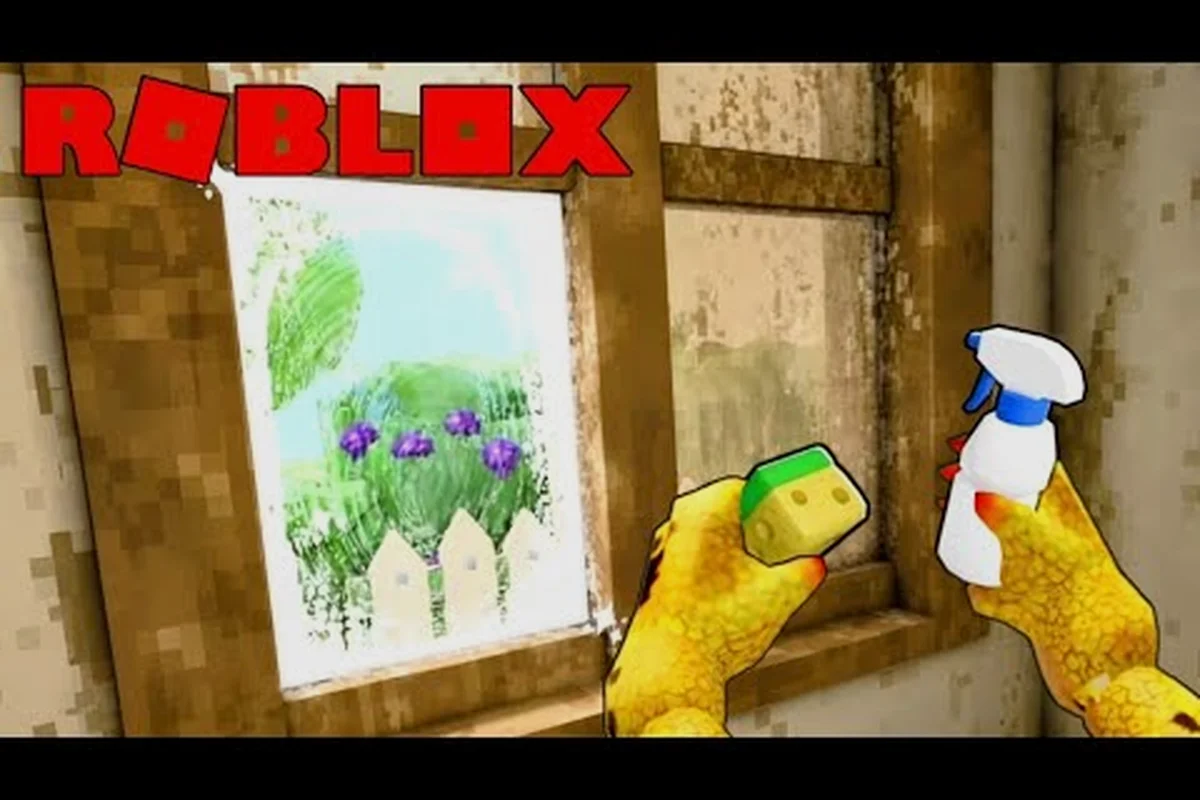
Understanding how a flip a house public server actually works changes the way you approach every renovation job. The game caps each server at 25 players, but the real decision happens much earlier: whether you run solo, pair up, or bring a full four-person crew. Getting the money split right matters because it determines whether your co-op session feels profitable or frustrating.
The Increates community page on Roblox resolves to the same hub as the classic group URL, carrying roughly 73,700 members, and it is the quickest way to find players who already understand the cleaning loop.
How a Flip a House Public Server Handles Player Counts
When you join a flip a house public server, you are dropped into a shared world with up to 24 other players working on their own houses. The official server cap sits at 25 concurrent players, which sounds crowded until you realize that the game's co-op model is built around smaller teams. The developer's recommended setup is a maximum of four players per house, and this number comes directly from how the cleaning and renovation mechanics scale.
The public server structure means you will see other players running between houses, hauling trash bags, and scrubbing floors in the same neighborhood. However, those players are not automatically part of your job. Each house operates as its own instance, so a 25-player server can host six full four-person teams plus one solo player without any mechanical overlap. This design keeps the public server lively while preserving the focused co-op experience inside each property.
| Player Count | House Access | Cash Handling | Recommended For |
|---|---|---|---|
| 1 player | Full control of all tasks | 100% of sale profit | Learning mechanics, relaxed pacing |
| 2 players | Split cleaning and furniture duties | Negotiated split | Balanced speed and communication |
| 3 players | Dedicated roles per room | Negotiated split | Medium houses with multiple floors |
| 4 players | Full parallel workflow | Negotiated split | Large houses, speed runs |
The key takeaway is that a flip a house public server does not force you into any team size. You can play entirely solo, invite one friend, or assemble a full crew of four. The server simply provides the shared space where all of these team configurations coexist. If you are still figuring out the basics of moving and interacting, the console controls guide walks through the fundamental inputs that every team member needs before joining a job.
Does Co-op Share Cash in Flip a House?
The most common question about flip a house how to split money has a surprisingly simple answer: the game does not automatically divide profits. When a house sells, the cash goes to the player who initiated the sale, and there is no built-in split mechanic that distributes earnings among team members. This means flip a house does co-op share cash only if you manually agree on a division before or after the sale.
Because the game lacks an automatic split system, players have developed community-standard methods for handling earnings. Some teams rotate who gets the full sale price, while others track contributions and divide the final amount manually through in-game trades or by alternating houses. The absence of a forced split is actually a design choice that gives teams flexibility, but it also means you need to establish the rules before you start cleaning.
| Split Method | How It Works | Best For | Risk Level |
|---|---|---|---|
| Rotation system | Each player takes turns receiving full sale profit | Trusted friends, long sessions | Low if everyone remembers the order |
| Manual division | Track hours or tasks, then split cash after sale | Balanced contribution teams | Medium, requires honest tracking |
| Solo profit | One player owns the house, others help for free | Teaching new players | High for helpers, zero for owner |
| Alternating houses | Each player owns and sells their own house with help | Equal partnership | Low, naturally fair |
Before committing to a co-op session, decide which split method your team will use. The rotation system works well for players who trust each other and plan to flip multiple houses in one sitting. Manual division suits teams that want precise fairness but requires everyone to agree on how to value different tasks. Whatever you choose, the conversation should happen before the first trash bag is filled, not after the buyer offer appears.
Building the Best Co-op Strategy for Public Servers
A strong flip a house best co-op strategy starts with role assignment before you even enter the house. The renovation loop in Flip a House breaks down into distinct phases: trash removal, surface cleaning, furniture placement, and final inspection. Assigning each phase to a specific player eliminates the chaos of two people scrubbing the same wall while the kitchen remains untouched.
Role Specialization by House Size
Small starter houses rarely need more than two players, but larger properties benefit from a full four-person crew with clearly defined roles. The most efficient teams use a lead cleaner who handles the dirtiest rooms, a furniture runner who fetches and places items, a trash specialist who clears debris first, and a quality checker who does the final walkthrough. This structure prevents the bottleneck where everyone waits for one slow task to finish.
| Role | Primary Duty | Secondary Duty | Best Player Type |
|---|---|---|---|
| Lead cleaner | Scrub floors and walls | Touch up missed spots | Fast, detail-oriented |
| Furniture runner | Place and arrange items | Help with light cleaning | Spatial awareness |
| Trash specialist | Remove all debris first | Prep rooms for cleaning | Efficient, methodical |
| Quality checker | Final inspection | Fix small issues | Patient, thorough |
The trash specialist role matters more than most new players expect. Because cleaning tools work faster on debris-free surfaces, clearing trash first accelerates every subsequent task. Teams that skip this role often find themselves re-cleaning rooms after furniture placement kicks up dust. If your team is still learning how to maximize profit per house, the money guide explains how cleaning quality directly influences the offers you receive.
Keeping Strangers Coordinated in Chat
Public servers do not require voice communication, and many successful teams coordinate entirely through the in-game movement and task visibility. The game shows which surfaces are dirty and which items are placed, so observant players can infer what still needs work. However, a quick text chat message like "kitchen done, moving to bathroom" prevents duplicate effort and keeps the workflow smooth.
Who Cleans What in a Flip a House Co-op Session
The question of flip a house who cleans what becomes critical when four players enter a large property without a plan. The most effective division follows the house layout rather than arbitrary room assignments. One player takes the entryway and living room, another handles the kitchen and dining area, a third covers bedrooms and hallways, and the fourth manages bathrooms and utility spaces.
This layout-based division works because each zone has a similar total workload when you account for room size and dirt density. Bathrooms are small but heavily soiled, while living rooms are large but relatively clean. Balancing these factors prevents one player from finishing early while another struggles through a nightmare bathroom.
| House Zone | Typical Tasks | Difficulty | Time Estimate |
|---|---|---|---|
| Entryway and living room | Trash, floor scrubbing, furniture | Medium | 4-6 minutes |
| Kitchen and dining | Grease, trash, appliance cleaning | High | 6-8 minutes |
| Bedrooms and hallways | Dust, floor cleaning, bed placement | Medium | 5-7 minutes |
| Bathrooms and utility | Heavy grime, toilet, sink, floor | High | 6-9 minutes |
The kitchen and dining zone consistently ranks as the most time-consuming area because grease stains require multiple passes with the mop or sponge. Bathrooms are smaller but demand precision cleaning around fixtures. Assigning your fastest cleaner to the kitchen and your most patient player to the bathroom creates a balanced finish time across the team.
Solo Play on a Flip a House Public Server
Flip a house can you play solo without any penalty, and many players prefer the solo experience for its simplicity. When you play alone, every cash reward is yours, every decision is instant, and you never wait for a teammate to finish their assigned room. The tradeoff is time: a house that takes a four-person team five minutes might take a solo player fifteen to twenty minutes.
Solo play on a public server also means you compete with other players for the best houses. The server spawns a limited number of properties, and popular listings get claimed quickly. Solo players who want specific houses should join less crowded servers or check the available listings immediately after joining. The absence of a team does not reduce the quality of your work, but it does increase the total time investment per flip.
| Play Style | Average Time per House | Profit per Hour | Stress Level |
|---|---|---|---|
| Solo | 15-20 minutes | Moderate | Low |
| Duo | 8-12 minutes | High | Low |
| Full team of 4 | 4-7 minutes | Highest | Medium |
The profit-per-hour calculation favors teams because the sale price does not scale with player count. A house that sells for $2,500 pays the same whether one player or four players worked on it. Teams flip more houses per hour, which means more total cash enters the group even after splitting. Solo players compensate by keeping 100% of each sale, but their hourly rate still trails a coordinated duo or team.
Frequently Asked Questions
How many players can join a flip a house public server?
A flip a house public server supports up to 25 concurrent players. However, the recommended co-op team size for a single house is four players. Larger teams create coordination overhead without meaningfully speeding up the renovation process. With five or more players, duplicate cleaning becomes inevitable—two people often target the same surface, and only one player's progress counts, effectively wasting the second player's time. A four-player squad can divide a standard house into zones (kitchen, bathroom, living room, bedroom) so each player owns a room from entry to exit, minimizing overlap and keeping the flip a house best co-op strategy running at full efficiency.
Does co-op automatically share cash in Flip a House?
No, flip a house does co-op share cash automatically. The player who initiates the house sale receives the full profit. Teams must manually agree on a split method, such as rotating who sells each house or dividing earnings after the sale.
What is the best way to split money in co-op?
The rotation system is the most popular flip a house how to split money method. Each player takes turns receiving the full sale price from consecutive houses. This approach requires no math and works well for trusted friends flipping multiple properties in one session.
Can I play Flip a House completely solo?
Yes, flip a house can you play solo without any restrictions. Solo players keep 100% of each sale but spend more time per house, since every trash bag, stain, and broken window falls on one person. The tradeoff is lower profit per hour compared to a coordinated duo or full team. A solo run typically takes 18–25 minutes per house on a standard flip a house public server, whereas a four-player zone split can finish in 6–8 minutes — meaning a solo player completes roughly three flips in the time a squad clears seven or eight. Solo is best for learning tool mechanics and market pricing without splitting earnings, but it cannot match the flip a house best co-op strategy for cash-per-hour once you know the renovation loop.
What happens if two players clean the same room?
When two players clean the same room, only the first player's progress registers on each surface, so the second player's trash bags and stain removals are completely wasted. On a flip a house public server, this is the single biggest cause of slow flips — a four-player squad that overlaps in the kitchen can lose 3–5 minutes per house compared to a strict zone split. The fix is to assign rooms before entering: one player takes the kitchen, another the bathroom, a third the living room, and the fourth the bedroom, with each player calling out when their zone is done so no one drifts into someone else's area.