
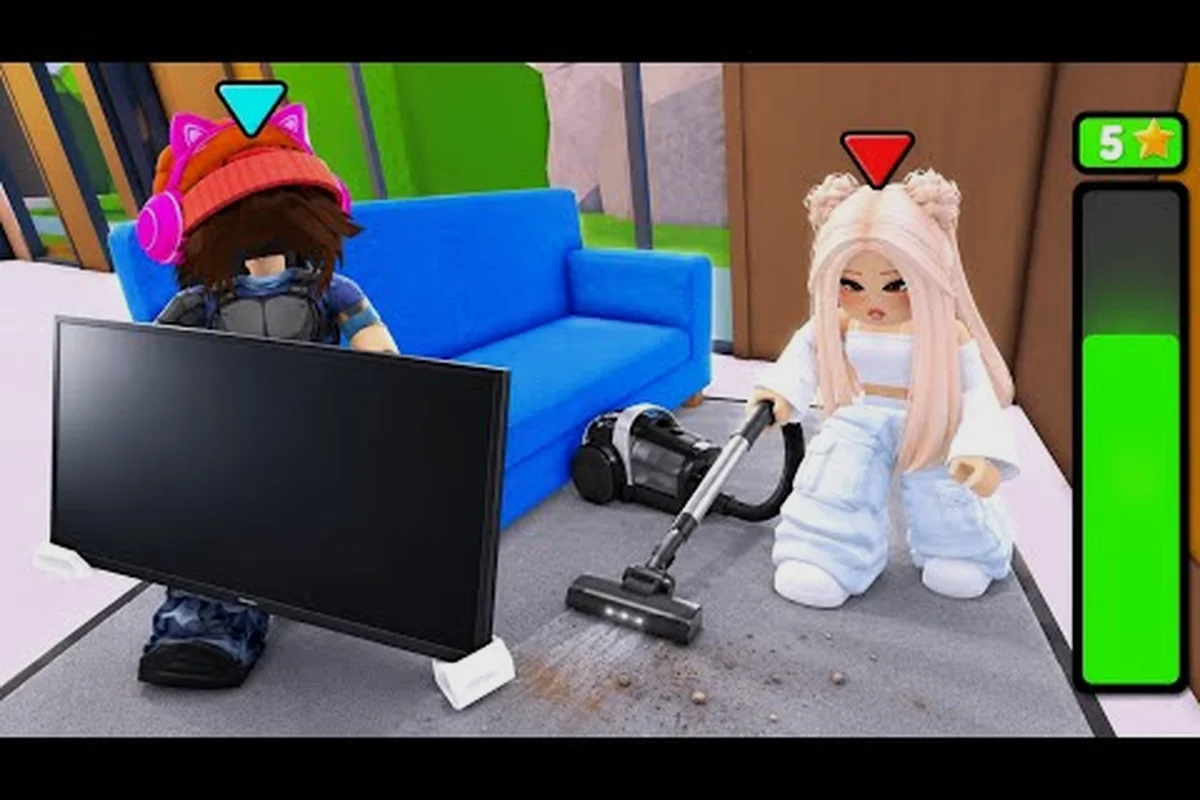
Starting your first renovation in Flip a House can feel overwhelming when you are staring at a trashed living room with nothing but a starter mop. This flip a house roblox guide breaks down the core loop so you can turn abandoned properties into reliable profit without wasting early payouts on the wrong upgrades. The game rewards players who understand the clean, furnish, and sell cycle, and once you lock in the right sequence, every house becomes a stepping stone to bigger tools and larger homes. Whether you are playing solo or with up to four friends, the fundamentals stay the same, and mastering them early will save you hours of slow grinding. For a deeper breakdown of how to prioritize those early purchases and avoid common beginner mistakes, check out this dedicated Flip A House Roblox Tips guide.
What the Clean-Furnish-Sell Cycle Demands
The entire experience revolves around a simple but satisfying progression chain that repeats with every property you take on. According to the official game page on Roblox, the loop starts with clearing trash out of an abandoned property, then moves through vacuuming and scrubbing every room before you fill the space with furniture to raise the sale price. Each completed sale unlocks better gear and larger houses, which means your early decisions about what to clean first and what to buy next have a compounding effect on your long-term earning speed.
The loop breaks down into four distinct phases that you will repeat dozens of times as you climb the property ladder. Understanding how each phase feeds into the next is the difference between a smooth flip and a frustrating grind where you feel like you are constantly short on cash.
| Phase | Primary Action | Key Tool | Payout Impact |
|---|---|---|---|
| Clear | Remove trash and debris | Trash bag | Unlocks cleaning surfaces |
| Clean | Vacuum and scrub rooms | Vacuum, mop | Raises base house quality |
| Furnish | Place furniture items | Furniture catalog | Multiplies sale price |
| Sell | Accept buyer offer | N/A | Converts quality to cash |
The clean, furnish, and sell loop is the heartbeat of the game, and every upgrade you buy either speeds up one phase or increases the payout from another. New players often rush to buy furniture before upgrading their cleaning tools, which creates a bottleneck where you can scrub a room perfectly but still cannot afford enough items to push the sale price into profitable territory. The better approach is to treat your first few flips as training runs where you learn room layouts, trash spawn points, and how much time each cleaning task actually takes.
Why Cleaning Speed Matters More Than You Think
Cleaning speed is not just about convenience; it directly controls how many flips you can complete in a session, which translates to how fast you accumulate the cash needed for better tools. A slower vacuum means you spend more real-world minutes on each room, and because the game does not pause while you scrub, every second of inefficiency compounds across the entire house. Players who upgrade their vacuum and mop early report finishing flips noticeably faster than those who prioritize cosmetic furniture first, according to community testing.
The math is straightforward: if a starter vacuum takes 30 seconds to clean a large room and the upgraded version takes 18 seconds, you save 12 seconds per room. Across a six-room house, that is over a minute saved per flip, and across ten flips, you have effectively earned yourself an extra house worth of progress. This is why the flip a house beginner guide approach always starts with tool upgrades before furniture splurges.
How to Play Flip a House: Your First Three Flips
Learning how to play flip a house effectively means treating your first three properties as a structured tutorial rather than a race to the biggest sale price. The game does not hold your hand through optimal upgrade order, so you need a plan that balances immediate payouts with long-term tool investments. Your first flip should focus entirely on learning the cleaning mechanics and understanding how house quality translates to buyer offers.
Start by walking through the entire property before you touch anything. Note where trash piles cluster, which rooms have the most stains, and how the furniture placement grid works in each space. This initial survey takes less than a minute but prevents you from wasting time backtracking later. Once you have a mental map, work room by room in a consistent order so you never leave a half-cleaned space behind.
Walking Through the Opening Property
The following sequence is designed to maximize your learning while still producing a sale that funds your first meaningful upgrade. Stick to this order until the loop feels automatic, then you can experiment with your own routing.
-
Survey the full house first: walk every room and note trash clusters, stain locations, and furniture grid boundaries before cleaning anything.
-
Clear all trash before vacuuming: trash blocks cleaning surfaces, so removing it first unlocks the full room for scrubbing.
-
Vacuum every floor surface: carpets and rugs hold dirt that lowers house quality, and skipping them caps your sale price.
-
Scrub visible stains and spots: use the mop or scrub tool on marked areas until the visual grime disappears completely.
-
Place furniture in every room: empty rooms drag down the final offer, so even cheap items raise the multiplier.
-
Check the buyer offer and sell: do not hold out for a perfect price on your first flip; the cash is worth more now than a marginal increase later.
The first house guide principle is simple: complete the loop, take the payout, and reinvest immediately. Holding out for a slightly better offer on your first property wastes time that could be spent on a second flip with better tools. Community reports consistently show that early momentum beats early perfection, especially when you are still learning room layouts and cleaning patterns.
Essential Tools and Upgrade Priority
Your tool loadout determines how fast you can clean and how much value you can extract from each house, so understanding the upgrade hierarchy is critical for efficient progression. The game offers several distinct tool categories, and each one affects a different part of the renovation loop. Spending your early payouts on the wrong tool can set you back several flips, while the right purchase immediately accelerates everything that follows.
The table below ranks the core tools by their impact on your overall earning speed, based on community testing and player reports. This is not a strict tier list, but it reflects the consensus among experienced flippers about where early cash should go.
| Tool | Primary Function | Upgrade Priority | Why It Matters |
|---|---|---|---|
| Vacuum | Clean floors and carpets | Highest | Most time-consuming task |
| Mop | Scrub stains and spots | High | Unlocks full room quality |
| Trash bag | Remove debris | Medium | Starter version is adequate |
| Furniture catalog | Raise sale price | Medium | More options, not speed |
| Sprint | Move faster between rooms | Situational | Quality-of-life upgrade |
The vacuum sits at the top of the priority list because floor cleaning consumes the largest share of your time in every house. Upgrading it early means every subsequent flip finishes faster, which compounds into more total flips per session and more cash for everything else. The mop is a close second because stains block full room quality, and leaving them uncleaned caps your sale price regardless of how much furniture you place.
When to Buy Furniture Upgrades
Furniture upgrades are tempting because they directly raise the sale price of every house, but they are less impactful than tool upgrades in the early game. The reason is simple: furniture only helps after you have cleaned the house, and if your cleaning tools are slow, you are spending too much time getting to the point where furniture matters. A balanced approach is to upgrade your vacuum and mop once or twice, then invest in furniture options, then return to tools when you unlock larger properties.
The flip a house tips and tricks consensus among experienced players is to never let your furniture budget exceed your tool budget in the first five flips. Once you can clean a starter house in under three minutes, furniture becomes the better investment because you are now limited by sale price rather than cleaning speed. This pivot point arrives at different times for different players, but the principle holds: speed first, value second.
Maximizing Sale Price Through Smart Furnishing
Furnishing is where the real money lives in Flip a House, and understanding how furniture placement affects the final offer is the key to turning a modest flip into a profitable one. The game calculates your sale price based on a combination of house quality and furniture coverage, which means a perfectly cleaned but sparsely furnished house will sell for far less than a decently cleaned but fully furnished one. The trick is finding the right balance between cleaning effort and furniture investment for each property tier.
Every room in the house contributes to the overall quality score, and empty rooms drag the average down significantly. This means you should aim to place at least one or two furniture items in every single room, even if they are cheap pieces, before you start adding premium items to the living room or kitchen. The furniture placement strategy that works best for beginners is coverage first, quality second.
| Room Type | Minimum Items | Recommended Items | Sale Price Impact |
|---|---|---|---|
| Living room | 2 | 4-5 | High |
| Kitchen | 2 | 3-4 | High |
| Bedroom | 1 | 2-3 | Medium |
| Bathroom | 1 | 2 | Medium |
| Hallway | 1 | 1-2 | Low |
| Dining room | 2 | 3-4 | High |
The furniture guide approach to maximizing sale price involves understanding that different rooms have different weightings in the final offer calculation. Living rooms, kitchens, and dining rooms tend to carry more value than hallways and bathrooms, so prioritizing those spaces with your best furniture yields a better return than spreading premium items evenly across the house. However, never leave any room completely empty, because the penalty for an unfurnished room outweighs the benefit of an extra premium item elsewhere.
The Coverage-First Furnishing Method
The coverage-first method is the most reliable way to boost your sale price without overspending on furniture that does not pay for itself. Start by placing the cheapest available item in every room to eliminate the empty-room penalty, then go back and upgrade the highest-value rooms with better pieces. This two-pass approach ensures you never waste money on a premium sofa in the living room while the bathroom sits completely bare.
Community testing shows that a fully covered house with mid-tier furniture consistently outsells a partially furnished house with premium items, even when the total furniture spend is similar. The reason is that the game rewards completeness, and the empty-room penalty is steep enough to erase the gains from a few expensive pieces. Once you have full coverage, you can start experimenting with premium items in high-value rooms to push your sale price even higher.
Scaling From Starter Gear to Endgame
Once you have mastered the basic loop and upgraded your core tools, the next step is optimizing your route through each house to minimize wasted movement and maximize cleaning efficiency. The difference between a casual flipper and an efficient one is not just tool quality; it is the order in which you tackle rooms and how you handle the transition between cleaning phases. Small routing improvements add up quickly when you are completing multiple flips per session.
One of the most effective advanced strategies is the room-batching method, where you complete one full phase across the entire house before moving to the next phase. Instead of clearing, vacuuming, and scrubbing one room completely before moving to the next, you clear all trash first, then vacuum all floors, then scrub all stains. This reduces tool-switching time and keeps you in a rhythm that feels faster even when the total work is identical.
The Tool-Switching Efficiency Trick
Tool switching is a hidden time cost that many players overlook, and minimizing it can shave meaningful seconds off every flip. Every time you switch from trash bag to vacuum to mop, there is a brief animation and mental adjustment that breaks your flow. The room-batching method reduces these switches to just a few per house, which keeps you moving at a steady pace.
The flip a house for beginners progression path should include practicing this batching technique on your second or third flip, once you are comfortable with the individual cleaning mechanics. Start with trash clearing across all rooms, then move to vacuuming, then finish with scrubbing. You will notice the rhythm almost immediately, and the time savings will show up in your per-flip averages.
Reinvesting Payouts for Compound Growth
The most important advanced principle is that every payout should be reinvested into something that either speeds up your next flip or increases its value. Hoarding cash in Flip a House does nothing for you, because the game is designed around continuous reinvestment. The compound growth loop works like this: better tools mean faster flips, faster flips mean more payouts, and more payouts mean better furniture and larger houses.
The table below shows a sample reinvestment sequence for your first ten flips, based on community-reported progression paths. Your exact order may vary depending on your playstyle, but the principle of continuous reinvestment remains the same.
| Flip Number | Primary Purchase | Expected Benefit |
|---|---|---|
| 1-2 | Vacuum upgrade | Faster floor cleaning |
| 3-4 | Mop upgrade | Faster stain removal |
| 5-6 | Furniture catalog | Higher sale prices |
| 7-8 | Sprint upgrade | Faster room-to-room movement |
| 9-10 | Larger house unlock | Bigger profit potential |
The flip a house roblox tips community consistently emphasizes that the first ten flips set the tone for your entire progression. Players who reinvest aggressively during this window reach larger houses and better tools significantly faster than those who save or spend on cosmetic upgrades. The game rewards momentum, and momentum comes from treating every payout as fuel for the next flip.
Frequently Asked Questions
Is Flip a House free to play on Roblox?
Yes, Flip a House is free to play on Roblox, with optional game passes available for players who want to accelerate their progression. The core renovation loop is fully accessible without spending Robux, and you can complete every house tier and unlock all tools through normal gameplay.
How many players can work on the same house?
Up to four friends can work on the same home simultaneously, which makes co-op flipping a viable strategy for speeding up larger properties. The official Roblox listing confirms the 25-player server cap, but only four players can actively collaborate on a single renovation project at once.
What should I upgrade first in Flip a House?
Upgrade your vacuum first because floor cleaning consumes the most time in every house, and a faster vacuum immediately reduces your per-flip duration. The mop is your second priority, followed by furniture catalog options once your cleaning speed feels comfortable.
Do I need to clean every room before selling?
Yes, every room contributes to your overall house quality score, and leaving any room uncleaned caps your sale price regardless of how well you furnish the rest of the property. The empty-room penalty is steep enough that full coverage with mid-tier furniture consistently outsells partial coverage with premium items.
Can I play Flip a House solo?
Absolutely, the game works perfectly as a solo experience, and many players prefer the focused pace of working alone. The cleaning and furnishing mechanics are identical whether you play solo or with friends, so you can progress at your own speed without missing out on any content.